A love letter to every flan, every dulce de leche, every bite of arroz con leche that abuela ever made on a Sunday afternoon.
Cuba runs on sugar. Not metaphorically — literally. The island was built on sugarcane, its colonial economy shaped by sweetness, its culture forever marked by the relationship between this land and the crop that defined it. And that history lives in every Cuban dessert, in every spoonful of dulce de leche and every slice of guava paste pressed against cream cheese.
The Spanish brought milk custards and egg-rich pastries. The African culinary tradition brought ingenuity — transforming simple ingredients like coconut, corn, and peanuts into sweets that are complex and unforgettable. Over centuries, it all merged into a Cuban dessert tradition that is unashamedly sweet, proudly indulgent, and absolutely non-negotiable.
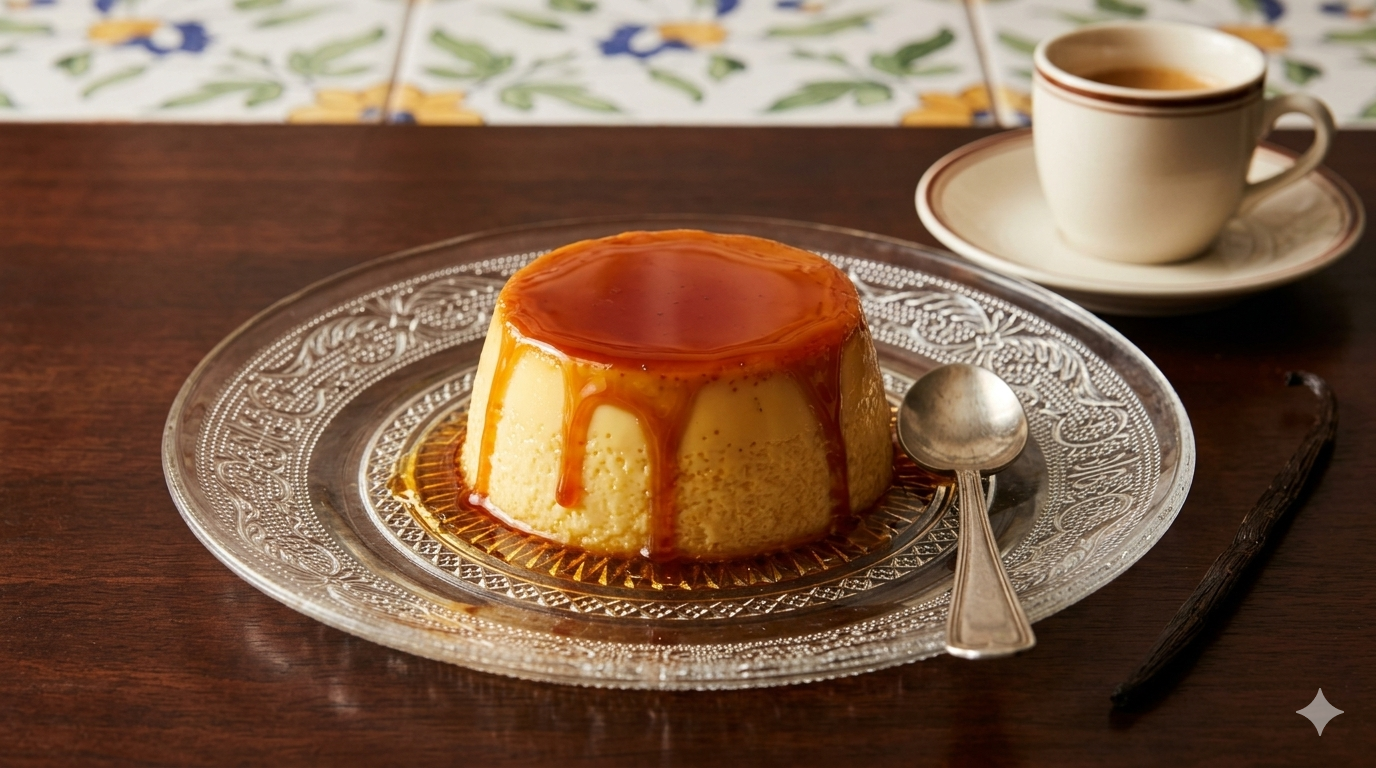
No Sunday meal in Cuba ends without something sweet. Not because of decadence — because that's just how it's done. The coffee goes on, the flan comes out, and whoever is still at the table is where they're supposed to be.
Ranked not by sophistication, but by how hard they'll make you close your eyes.
Not "arroz con dulce." Do not confuse them — ask any Cuban abuela and you will hear about it. Arroz con leche is pure rice pudding: short-grain rice cooked slowly in whole milk with cinnamon stick and a strip of lemon peel until it becomes thick and impossibly creamy. Then sweetened, dusted with ground cinnamon, and served warm or cold depending on who's in charge of the kitchen. It tastes like every Sunday afternoon that ever existed. It is comfort in a bowl.
🥄 Sunday SpecialSponge cake — airy, barely sweet on its own — soaked from above with a mixture of three milks: evaporated, condensed, and heavy cream. The liquid is absorbed slowly, completely, until each piece of cake is dense with dairy richness but still somehow light. Topped with sweetened whipped cream. It's the kind of cake that shouldn't work but absolutely does. It makes no logical sense that something this saturated could be this delicate. Cuba does not care about logic. It cares about flavor.
🍰 Party CakeWhole milk and sugar, cooked together in a heavy pot over low heat for an hour or more, stirred constantly as it darkens from cream to caramel to deep amber, thickening until it coats the spoon and drips off in long ribbons. Dulce de leche is Cuban spreadable gold. Eat it on pan cubano. On crackers. On guava paste. Off the spoon directly. Store it in a jar and it will be gone within a week because willpower doesn't exist in the presence of dulce de leche. This is not a flaw. This is correct. These sweets appear on every menu at authentic Cuban restaurants — order the flan and you will not be disappointed.
✨ Liquid GoldFigure-eight shaped fried dough made from a base of yuca and malanga — root vegetables that give the dough a distinct chew and a slightly savory undertone that makes the sweetness of the anise syrup all the more striking. These are a holiday food, a New Year's Eve food, a Three Kings Day food. You find them in December and January at family gatherings, on foil trays on the counter next to the roasting pork. They smell like anise and hot oil and celebration. Every Cuban home has a recipe. They're all slightly different. They're all delicious.
🎊 Navidad TraditionIf flan is the king, natilla is the gentler cousin — softer, looser, poured into cups rather than unmolded. It's a vanilla custard pudding thickened with cornstarch rather than eggs alone, giving it a silkiness that is almost fluffy. Warm cinnamon drifts through every bite. Served in individual cups with a dusting of ground cinnamon on top, natilla is the dessert you give to children and elders and anyone who needs something soothing. It does not demand attention. It rewards patience. It disappears quickly and you're always glad you made extra.
🌿 Gentle & SilkySimple enough to explain in two sentences. Incredible enough to be in every Cuban grandmother's repertoire. Grated fresh coconut mixed with sugar and cooked down until it forms a stiff paste, then rolled into small balls and rolled in more grated coconut. Some versions add a drop of vanilla. Some add lime zest. Some add a tiny bit of anise. All versions disappear from the plate within minutes. They look humble — small, white, unassuming. One bite and you understand that understatement is a Cuban art form.
🌴 Tropical FudgeCuban meringue cookies are baked low and slow until they're completely dry — hollow inside, brittle on the outside, dissolving on the tongue in a rush of pure sweetness. They're shaped in rounds or small kisses, sometimes tinted pink with a drop of food coloring, sometimes left pure white. They're sold at every panadería alongside the flan and the pastelitos. They require patience — hours in a low oven — and they're worth every minute. The best ones have a slight caramel note at the edges where the sugar deepened. Those are the ones you eat standing over the box.
☁️ Hollow & PerfectThis is street food and dessert at once. Roasted peanuts suspended in hardened caramel, poured onto a greased surface, pressed flat, and broken into irregular shards. Sold wrapped in newspaper from wooden carts by vendors who've been doing this for fifty years. The caramel shatters between your teeth and the peanuts are warm-toasted and the sweetness is cut by just the right amount of salt. In Cuba, turrón de maní follows you through the street. In Miami, you find it at Cuban bakeries. Anywhere you find it: buy it. Immediately.
🍬 Corner StapleGuava paste — thick, jewel-red, intensely sweet with the floral tartness of guava — layered with cream cheese between two sheets of flaky pastry dough and baked until golden. Cut into small squares. That's it. That's the recipe. The magic is in the tension between the sweet-tart fruit paste and the cool, mild cream cheese, the shatter of pastry giving way to two completely different textures. The combination of guava and cream cheese is so fundamental to Cuban flavor that it appears in everything: pastelitos, cakes, breakfast plates. The cortadillo just celebrates it properly.
🌺 Guava & CreamEl que no conoce de dónde viene, no sabe a dónde va. And the one who hasn't tasted flan cubano hasn't tasted Cuba.
— Cuban saying, adapted by every abuela ever
Cuba was the world's largest sugar producer for much of the 18th and 19th centuries. The island's entire colonial economy revolved around sugarcane — and that sugar found its way into everything the Cuban people cooked. Spanish colonizers brought their egg custards, their turrónes, their almond sweets. The African culinary tradition brought coconut preparations, corn-based sweets, and a mastery of working with whatever was available and making it extraordinary.
The result is a dessert tradition that doesn't separate itself from history. When you eat flan cubano, you're eating a dish that has been present at Cuban tables for 300 years. When you crack into buñuelos at New Year's, you're participating in a ritual that predates anyone alive. Cuban desserts carry memory in every bite.
Years of Cuban dessert tradition
Sugar producer in the 19th century world
Cultural traditions woven into every sweet
Abuela recipes that are all "the best flan"
When you're ready to visit Cuba, check our complete Cuba visa and entry guide.
Sweet teeth will find paradise in Cuba. Book a table at one of Havana's top-rated paladares and save room for dessert. Our Cuba travel guide will help you plan every delicious day.